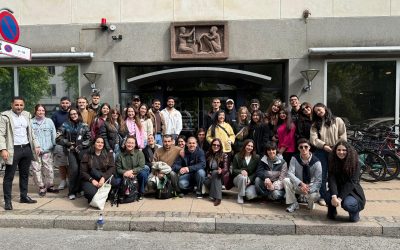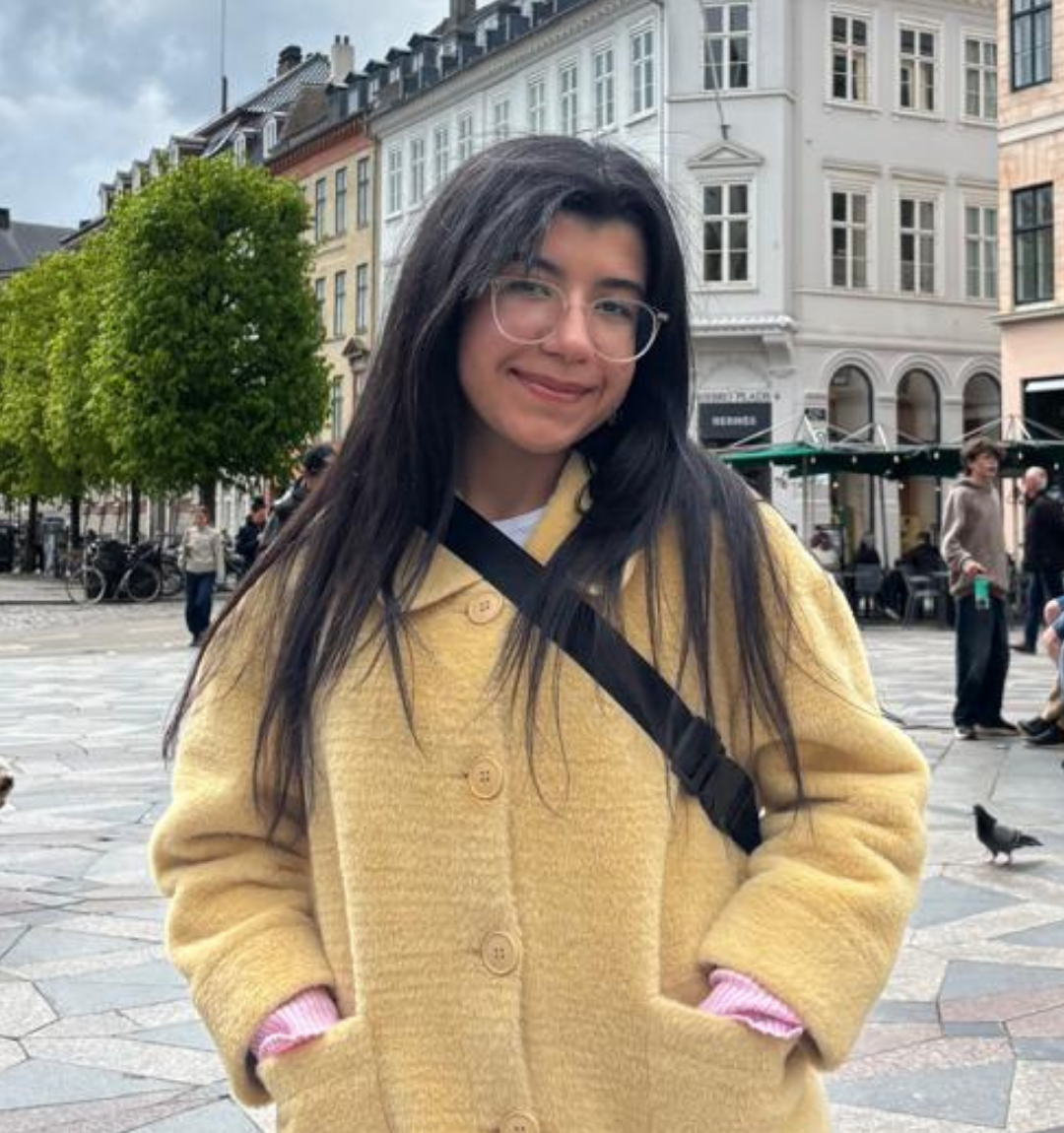
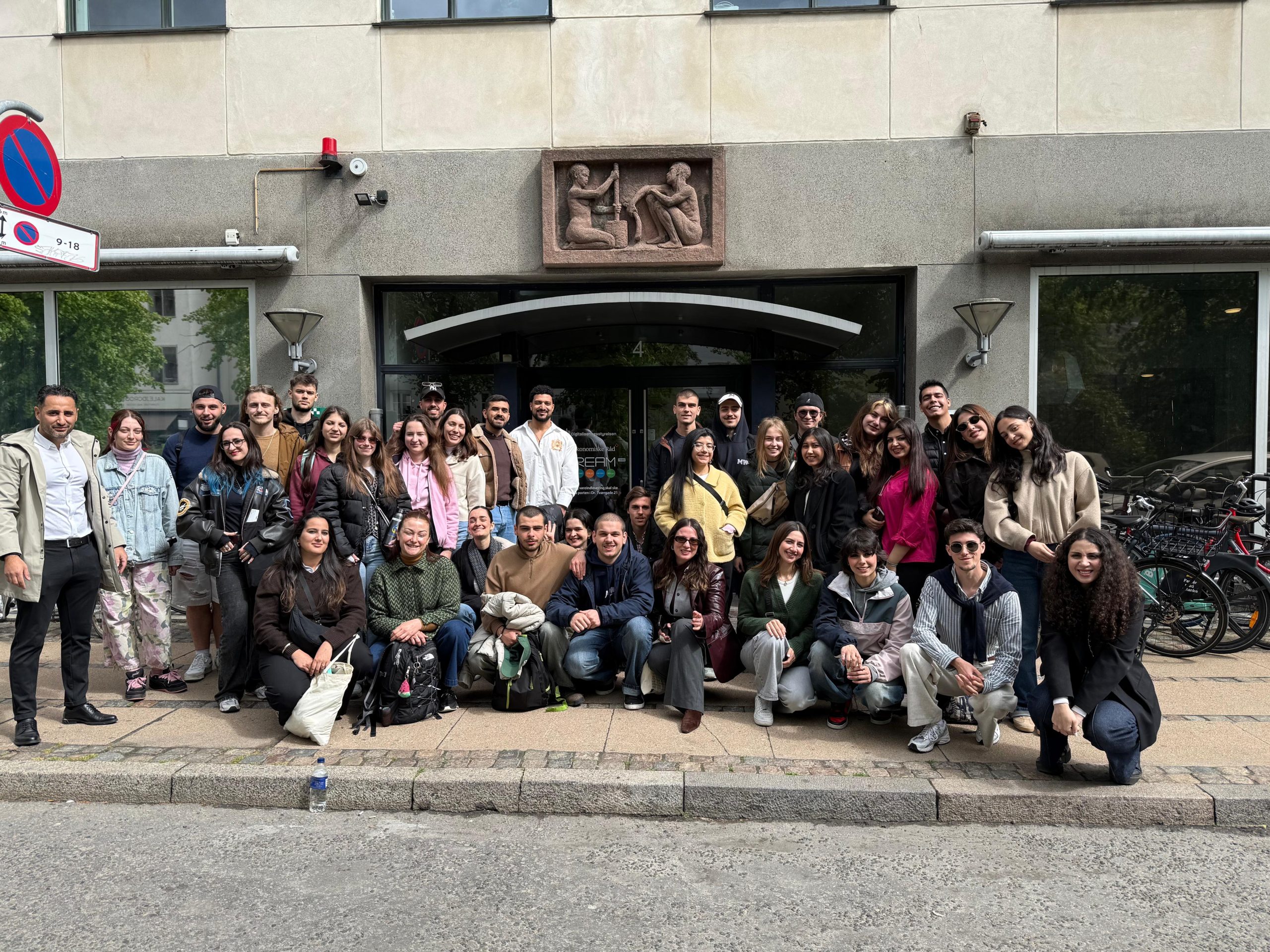
I recently took part in a Youth & AI Erasmus+ project in Denmark, held from May 10-19, organized by Copenhagen Youth Network (CYN). The project brought together young people from Jordan, Georgia, Finland, Bulgaria, Denmark, Ukraine, and Portugal to explore artificial intelligence through workshops and discussions. The two things that stayed with me most beyond the structured program were: how we approach learning in unfamiliar environments, and how our thought process shifts when we’re surrounded by people who think differently outside of our comfort zone.
I believed I would return with new knowledge about AI, a new network, and a meaningful experience only. However, it has also broadened my horizons and restructured my usual thinking pattern in a positive way.
Denmark has a quiet, steady atmosphere that is hard to describe until you dip your toes and enjoy it through an experience, and that included spending ten days in the suburbs of Værløse. It’s not overwhelming and it doesn’t force anything on you. However, it gives you the space to think and observe, and most importantly, to sit with ideas without immediately moving on to the next distraction, ideas that included those that sprung from personal thoughts and feelings, far from the outside influence. At first, it felt different, but over time, that space started to change how I processed everything around me, from the people I was interacting with to the sessions I was participating in.
The exchange focused on AI and digitalization, and naturally, a lot of our time was spent discussing artificial intelligence, how it works, how it is used, and how it is shaping society. But what made the experience meaningful wasn’t just the topics themselves; it was how participants from different backgrounds and cultures approached them, and how they came up with solutions and ideas. The Georgian team had a humorous way of approaching solutions, while the Bulgarian team had a deeply intellectual way of expressing their thoughts, while the Jordanian team broke down complex ideas into simpler ones for everyone to comprehend.
You had to reach out and dig for the solutions in front of the problems and questions presented to you. The answer would not come in an in-class lecture way of learning, but instead, in a very informal way of teaching that included many posters that forced you to dig deep into your brain and come up with a human solution.
The most important parts often happened outside of the sessions, in the in-between moments. Conversations during coffee and lunch breaks, walks between activities to the supermarket, playing volleyball in the cold spring weather, and late-night discussions through games and casual conversations became just as important as the workshops themselves. People spoke more openly about their countries, their experiences, and how technology is shaping their everyday lives in ways that are often very different from your own. What fascinated me throughout this process is how raw and unfiltered you can get the information through real-life conversations over the internet and social media, where everything is monitored and filtered thoroughly.
One topic that kept coming back, directly or indirectly, was how quickly we reach out to AI in our daily thinking. We started noticing how easy it has become to stop giving ourselves the space to think things through. Instead of pausing, reflecting, or trying to come up with our own ideas, we often jump straight to AI tools for answers, such as ChatGPT or Google Gemini, in my opinion. And this was mostly noticed throughout the sessions that involved coming up with solutions.
It became a clear realization to me that we are slowly outsourcing parts of our cognitive skills without even noticing it. Not necessarily in a negative way, but in a way that raises questions about how we learn, how we decide, and how we stay mentally fit in a world where answers are always instantly available. One question that kept ringing through my head was: are we giving ourselves the space to think? To question? To be genuine in our ideas? Have we casually traded our brains for our phones?
I’ve also started to notice a shift in myself somewhere in the middle of the exchange. A pause in the moment of time where the realization hit me: I’m starting to think and perceive differently. It was not sudden or dramatic, but gradual and continuous. I became more patient with approaching ideas. I stopped trusting my first reaction as the final one. I listened more carefully, not just to respond but also to understand, as it was a chance for a real-life learning experience.
Being surrounded by so many different perspectives forced me to slow down my thinking and question things I would normally take for granted. And that, I believe, was a major influence on my cognitive skills and usual thinking pattern when I’m approaching ideas and questions. One of the personal reflection exercises I did involved looking at Jordan through the eyes of a Jordanian who is physically outside the country. It made me feel a strong urge to return, reconnect with my culture and history on a deeper level, and be able to share more about Jordan with those who deserve to know it.
During the exchange and as the ice melted, my connections formed slowly, often with people who had the hunger to share information and stories in meaningful ways, and who I could genuinely learn from. Throughout the project, we also used different reflection methods like choosing cards, supportive trios, and catch the ball, which helped us connect faster with participants from other countries.
At the same time, being away from my usual routine at home gave me something I didn’t fully realize I needed. Stepping out of daily obligations such as work and my responsibilities as a daughter created mental space that is often hard to find in everyday life. It gave me more room to reflect, observe, and simply think without urgency. Being around people who shared a similar curiosity about ideas and the world made that space even more noticeable.
At one point, someone joked that it felt like our “frontal lobe is developing” during the program, and it rang a thought in my head. We were all sharing the same space, learning methods, and routine. There was a huge possibility that we were all somehow sharing the same inner feelings I felt were personal to share.
Additionally, I found that my brain took a lot of memory captures throughout the project, in order to sit with those moments and process them better later on, as it was prioritizing living that moment thoroughly. A month later, my journal fell victim to my writing and processing, which I now partly share with you, the reader.
By the end of the program, I realized the experience was not just about artificial intelligence or Denmark as a location. It was about awareness, of how we think, how quickly we respond to things, and how often we avoid sitting with uncertainty or complexity. It was about how we approach things, people, and solutions to various situations, which reminded me to constantly reflect on this experience and allow the effect of the project to take onto my character, for the skills it taught me indirectly.
I didn’t leave Denmark with fixed conclusions about AI. Instead, I left with more awareness of how easily we give up the chance to think for ourselves, and how important it is to protect that space in a world that constantly offers faster answers. In summary, it gave us a push to practice the skill of critical thinking genuinely. It didn’t feel like something I simply attended. It felt like something that gradually reshaped how I see thinking itself. And I will be constantly reflecting on the moments I lived through during this project, as I see the ten-day project as a lifetime experience.
I would also like to express my sincere thanks to the Copenhagen Youth Network (CYN) in Denmark and the Support Youth Leaders (SYL) in Jordan for organizing and supporting this exchange. Their efforts created an environment where real conversations could happen, where young people were not just taught about AI, but encouraged to question it, reflect on it, and connect it to their own lives in a meaningful way.
With love,
Noor Al Maayeh